Zero Retention
Yaw / Windage StabilitySingle claw mounts can struggle with windage retention. The Hansel extends rearward and includes 2 nylon-tipped screws which "pinch" the receiver in order to eliminate lateral rotation.

Home/Technology
The objective was a more rugged, more ergonomic, and more streamlined MP5® optics mount shaped by design requirements rather than imitation.
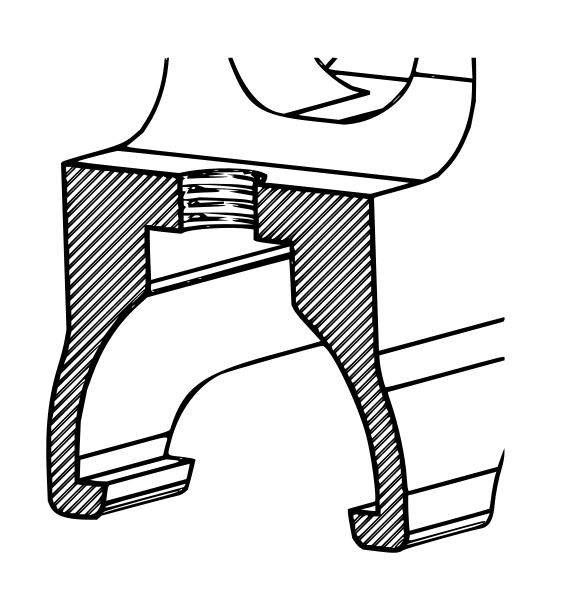
01
Since the 1960s, MP5 optic mounting solutions have typically forced a tradeoff between ergonomics, quick attachment, and durable zero retention under impact. We decided it did not have to stay a zero-sum game.
Carbines deserve optics, and they deserve optics that do not work against you when it comes to ergonomics and durability. A box full of mounts that didn't do what I needed, and a garage borne solution that involved a hacksaw and epoxy which worked (and still does in fact), but was not reproducible led to a complete re-thinking of what we need and what we are trying to accomplish.
The Hansel and other mount variants were designed to remove that compromise.
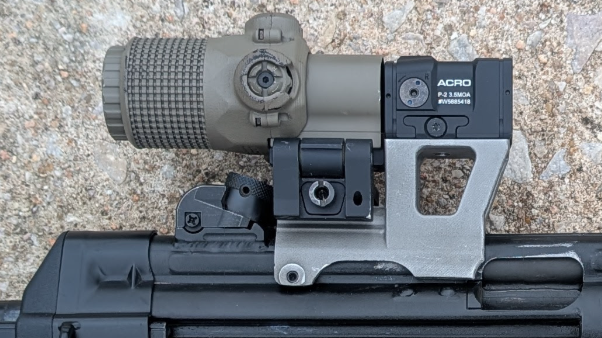
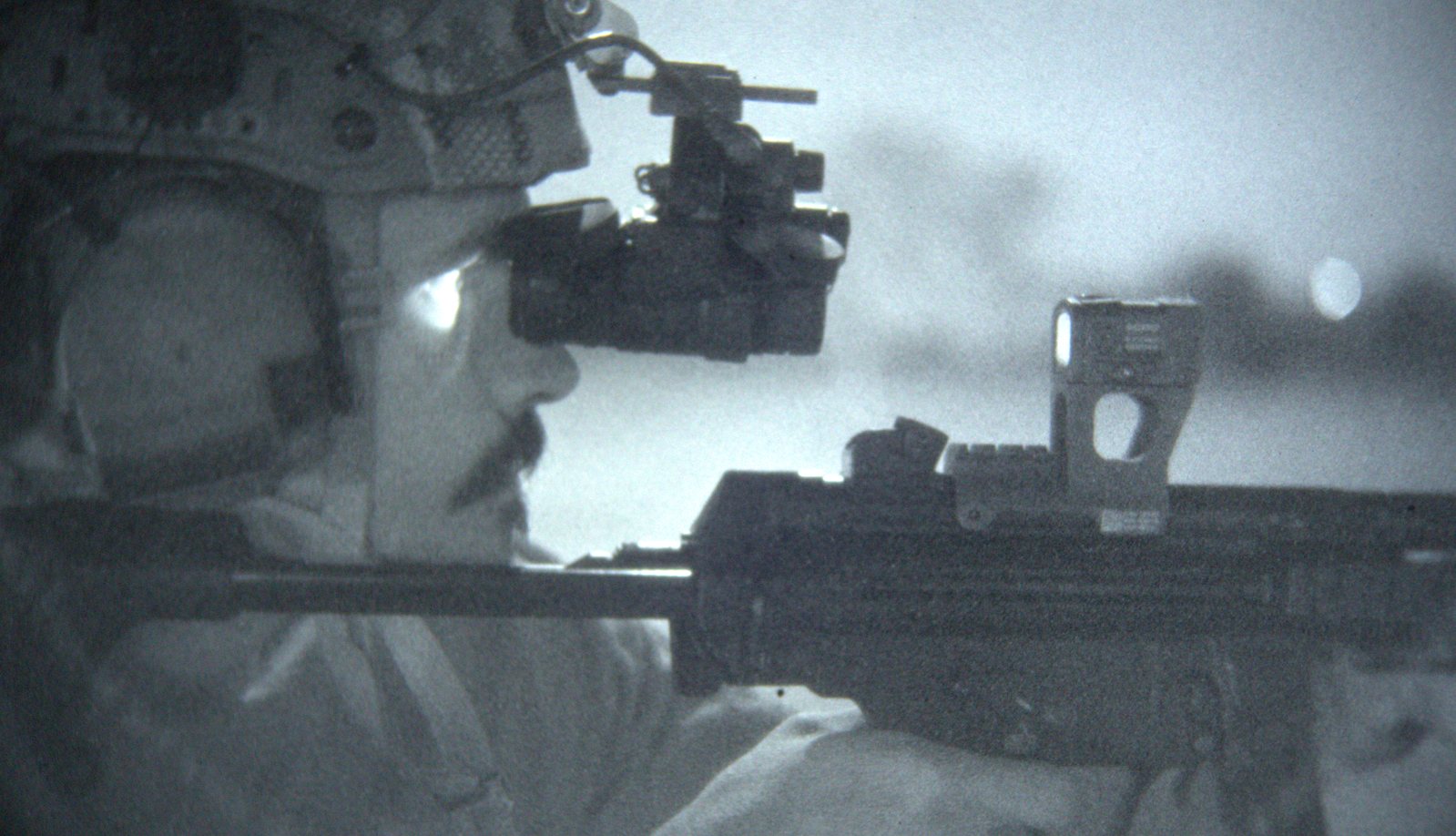
That includes what goes behind the optic. The built-in riser puts the optic at about the height of a 1.5" riser on a standard MP5 picatinny rail, so it works for passive aiming under night vision and with a flip-to-side magnifier behind the red dot.
02
The requirements were developed before the product. We must mount an optic to a stamped receiver, rigidly in all 6 degrees of freedom.
Must not put metal in front of the ejection port where it has a high chance of interfering with the charging handle. Must be quick and easy to install and every part must be justified.
In the end the little "claw nuts" never appeared in the design - they were never required. Only 1 part survived - the unitary body. Lateral stabilization was needed to keep the mount from rotating significantly even after mounted when subject to abuse. From these requirements a solution was born and from that solution a product. We aim to do the same in the future.
If there had been a product on the market that fulfilled these requirements already, we would be using it. Great hardware and designs already exist, but some problems are left un-answered. We aim to operate in this space entirely. Something new instead of something better, in other words innovative solutions or nothing at all.
03
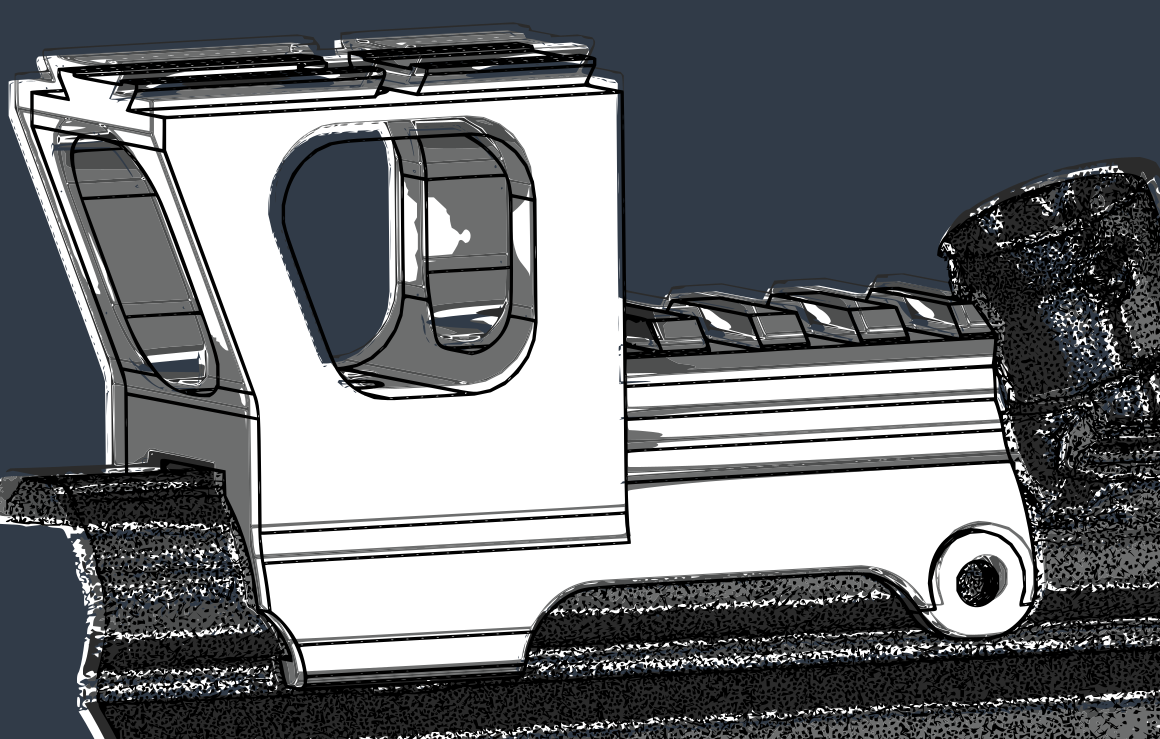
Single claw mounts can struggle with windage retention. The Hansel extends rearward and includes 2 nylon-tipped screws which "pinch" the receiver in order to eliminate lateral rotation.
1 unitary body and 3 screws that never have to be completely removed. Claw surfaces are integrated, and the mount can be installed with 1 hand in less than 30 seconds.
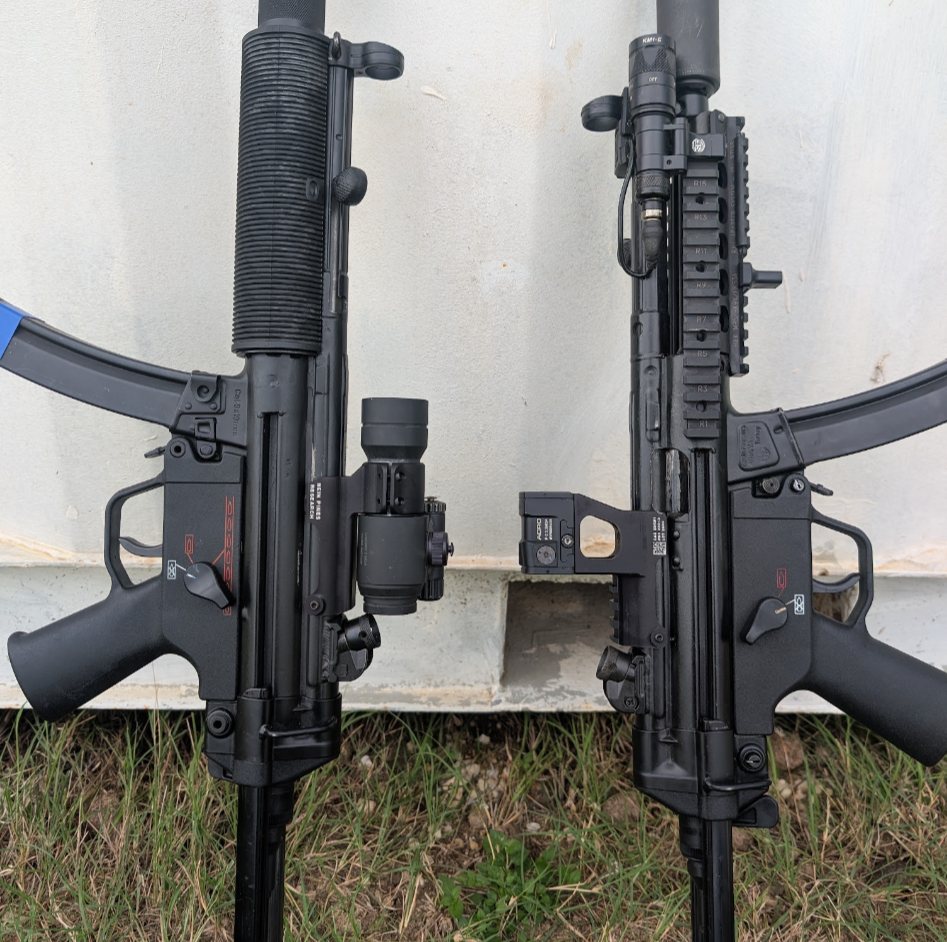
Does not extend further than the ejection port. This is a key design constraint especially for users with the shorter MP5K receiver.
04
Many ergonomic single-claw mounts fail to keep the sight aligned in windage due to the lack of lateral control that the front claw provided in the more traditional configuration.
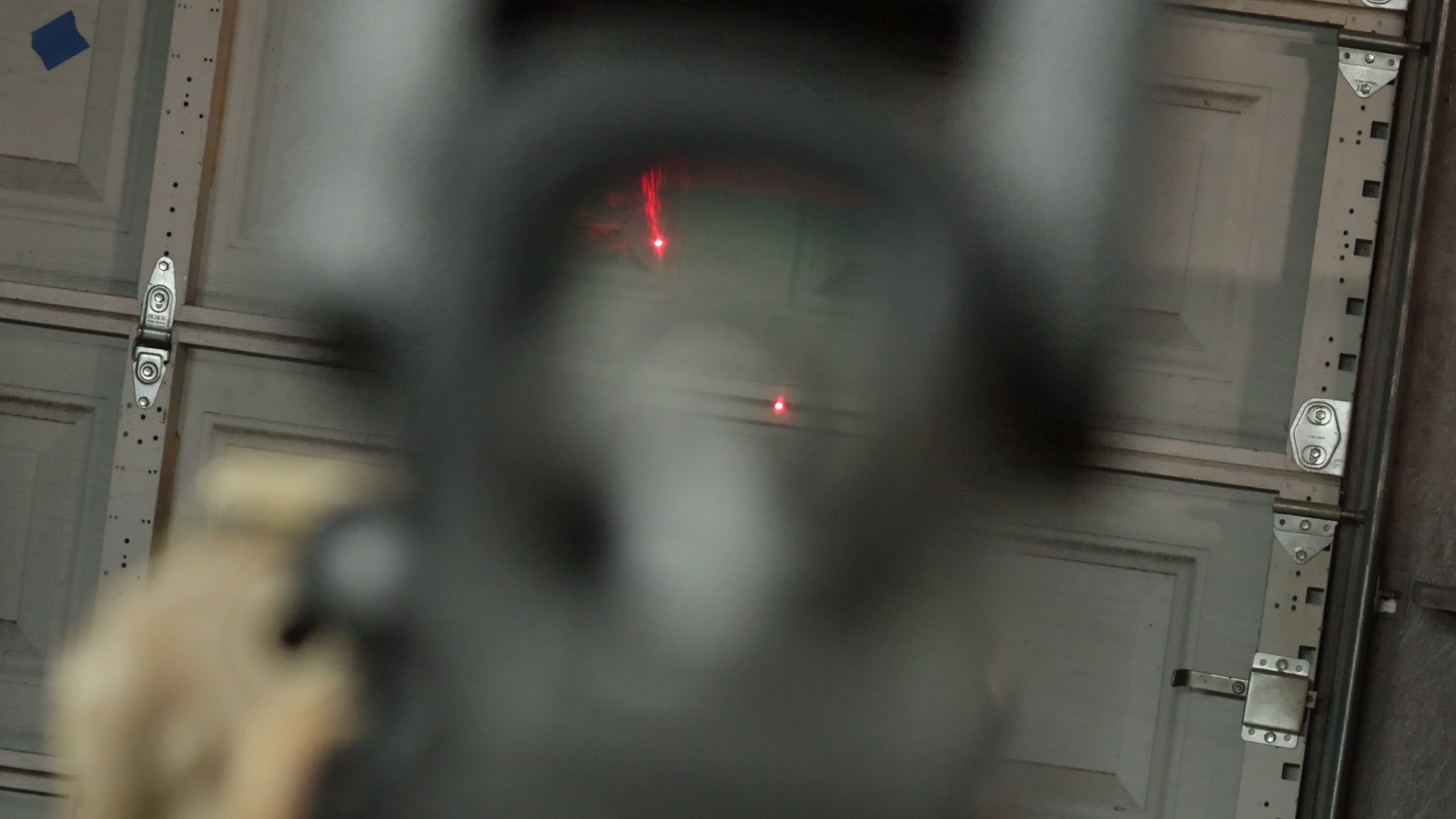
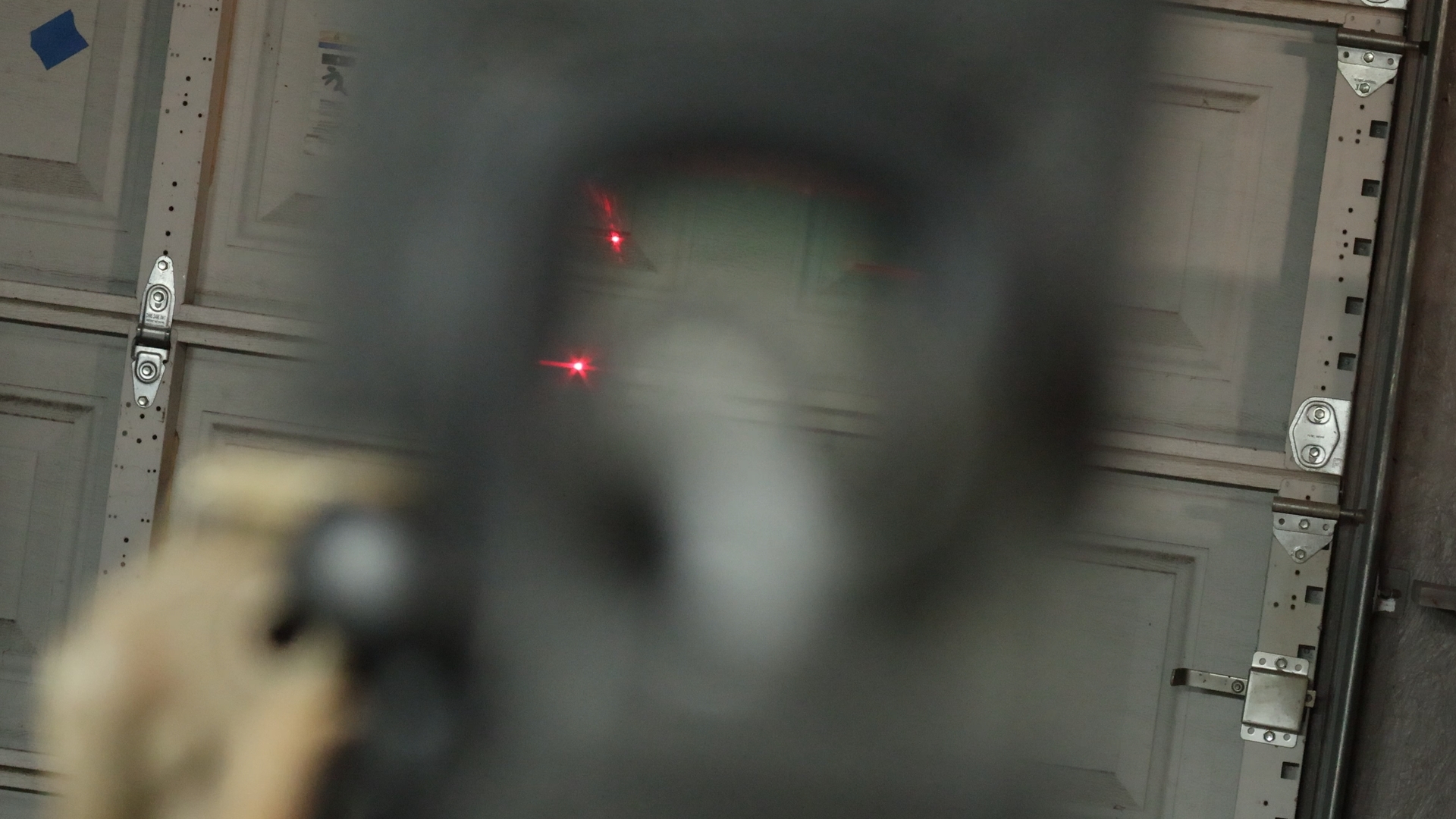
Test pictured above: legacy single-claw mount. The top red dot is a fixed laser reference point. The bottom red dot is the optic point of aim before and after torque is applied.
Reproducible zero shift approximately equal to the width of the front sight hood in legacy single-claw mounts. This is not a removal-and-reinstall issue. It is zero shift that occurs without the mount ever being removed.
Lateral control features allow the Hansel mount to retain windage zero beyond 10 ft-lbs in testing.
Combined with the rigidity of the solid-claw and top-tensioning design, the Hansel solution is a mount which is as durable as the bulky mounts, as ergonomic as the single-claw mounts, and almost as quick to install as the QD mounts.
05
Feedback is a huge driver. For questions and general comments, email kevin@neinpines.com. You can also follow along on X and Instagram.
Learn about ongoing development, new concepts, and progress toward production.